
No, digital marketing is not hard to start. But mastering it? That takes time, the right plan, and real practice. The good news — anyone can learn it. You don’t need a degree, coding skills, or a big budget. You just need direction.
Every week, hundreds of people search phrases like “is digital marketing hard,” “can a fresher learn digital marketing,” or “how long does it take to get a job in digital marketing.” Most of them are curious beginners — students, working professionals, small business owners — trying to figure out if this field is actually for them.
This article gives you a straight, honest answer. No fluff, no sales pitch. Just the real learning curve, what’s easy, what’s not, and exactly how to get started.
Is Digital Marketing Easy or Hard? Why People Get Confused
Here’s the funny thing about digital marketing. When you look at it from the outside, it seems simple. Someone posts on Instagram, runs a Facebook ad, writes a blog — and calls it digital marketing. Easy, right?
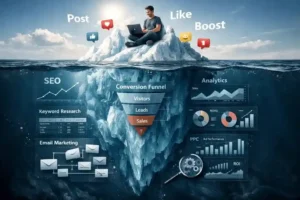
Then you start learning. And suddenly there’s SEO, Google Analytics, email automation, paid ads, keyword research, content strategy, conversion funnels… and it feels like you opened a door into a maze.
Neither extreme is accurate. Digital marketing isn’t magically easy, and it’s not impossibly hard either. What most beginners experience is a surface-level illusion of simplicity followed by the real depth underneath.
“It looks like posting. It feels like a science. It works when it becomes a skill.”
Quick online courses that promise “learn digital marketing in 7 days” make it look like a shortcut. But those courses teach you what digital marketing is, not how to actually make it work for a business. There’s a big difference.
What Makes Digital Marketing Hard or Easy?
Let’s be specific. Not everything in digital marketing is equally difficult.
Harder Parts
- It covers multiple areas — SEO, ads, content, analytics, email — all under one umbrella
- Platforms like Google and Instagram update their algorithms constantly
- Reading data and making the right decisions from it is a real challenge
- Expecting quick results leads to frustration and giving up early
Easier Parts
- Tools are built for non-technical users — you don’t need to code
- Plenty of free resources and courses to start from scratch
- Starting with just one skill keeps it manageable
- Real-world practice speeds up your learning faster than any textbook
The challenge isn’t the tools — it’s the thinking. Knowing what to post is easy. Knowing why it should work, how to measure if it did, and what to do next — that’s where real skill lives.
Is Digital Marketing Easy to Learn for Beginners or Hard?
Its easy for Beginners — if your approach with the right mindset and structure.
You don’t need a degree, programmer background. or expensive equipment. Most digital marketing tools — Canva, Google Search Console, Meta Ads Manager, Mailchimp — were designed with everyday users in mind. If you can use a smartphone and browse the internet, you already have the basic literacy to start.
What trips beginners up isn’t the tools. It’s trying to learn everything at once. When you try to study SEO, paid ads, email marketing, and social media content all in the same week — your brain gets overwhelmed and nothing sticks.
The smarter way? Pick one area. Get comfortable with it. Then expand. That single shift makes digital marketing feel very learnable, very fast.
How Much Hard Is Digital Marketing? Skill-by-Skill Breakdown
Here’s a reality check on the major skills beginners encounter:
|
Skill |
Perceived Difficulty |
Real Reality |
| Social Media Posting |
Easy |
Easy to start, but building real reach and engagement takes strategy |
| Basic SEO |
Moderate |
Concepts aren’t hard — but the strategy, patience, and execution matter a lot |
|
Data & Analytics |
Hard |
Reading numbers is one thing; knowing what to do with them is another |
| Paid Ads (Google/Meta) |
Hard |
Budget decisions, audience targeting, and metrics optimization take real practice |
| Content Writing |
Easy |
Writing is accessible — but writing content that converts readers into buyers is a craft |
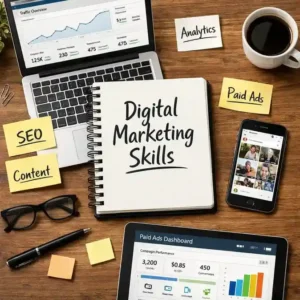
Notice a pattern? Most skills are easy to begin and harder to master. That’s actually good news. You can start creating value quickly, then deepen your knowledge over time. You don’t have to wait until you’re “ready.”
Is Digital Marketing Hard for Freshers and Job Seekers?
Let’s be honest yes: getting your first job in digital marketing is competitive. There are many applicants. But here’s the thing — most of them lack real applied experience, not ability.
Employers don’t just want someone who watched 30 hours of YouTube tutorials. They want proof that you’ve actually done something. A campaign you ran. A blog you grew. A project where you tracked results and made decisions based on data.
The freshers who get hired early are usually the ones who didn’t wait for a job to get experience. They built a personal brand, did a free project for a local business, ran small test campaigns with minimal budget, or completed an internship. That’s the shortcut — if there is one.
The gap between freshers isn’t talent. It’s portfolio. Start building yours today.
Is Digital Marketing a Good Career in 2026?
Yes digital marketing is a good career— but let’s talk about it clearly, not just in hype.
Digital marketing roles are growing. Businesses of every size — from local shops to global brands — need people who understand online visibility, audience targeting, and data-driven decisions. The demand isn’t slowing down.
The pros are real: flexibility to work remotely or freelance, variety of roles (SEO, content, paid media, analytics), and a skill set that transfers across industries. You can specialize or generalize. You can work in-house, at an agency, or for yourself.
But be honest with yourself about the cons too. This field changes constantly. What worked in paid ads two years ago might be outdated today. Algorithms shift. New platforms emerge. If you’re not someone who enjoys continuous learning, digital marketing can feel exhausting.
The people who succeed long-term aren’t the ones who learned digital marketing once. They’re the ones who stayed curious and kept updating their skills.
Why Digital Marketing Feels Hard for Beginners (Common Mistakes)
If you’re just starting out, avoid these traps:
- Jumping between random tutorials with no clear structure or goal
- Expecting income or clients within weeks of starting to learn
- Trying to master SEO, ads, email, and social media all at the same time
- Learning theory but never actually running a real campaign or project
- Not tracking results — and therefore not knowing what’s working
Each of these mistakes has the same root cause: no clear plan. When you have a roadmap, you avoid most of these pitfalls naturally.
How to Learn Digital Marketing Easily (Step-by-Step for Beginners)
Here’s a step-by-step path that actually works:
1. Understand the basics first
Learn what digital marketing is, its key channels, and how it all connects before diving into specifics.
2. Pick one channel and go deep
Start with content marketing or social media — something tangible. Build confidence before adding more channels.
3. Practice with real projects
Create a blog, manage a social page, or help a local business. Real experience beats any certification alone.
4. Learn to track and measure
Set up Google Analytics, understand basic metrics, and start making decisions from data — not guesses.
5. Add advanced skills — SEO & ads
Once you have a foundation, layer in paid advertising and technical SEO. These become much easier with context.
6. Build a portfolio
Document everything — campaigns, results, case studies. This is what gets you hired or lands your first clients.

Consistency beats intensity — every time.
Spending 45 minutes daily on structured learning and practice will take you further in 3 months than binge-watching 10 hours of content over a weekend. Progress in digital marketing is about steady, applied effort — not sprint sessions.
FAQs: Is Digital Marketing Easy or Hard?
Can I learn digital marketing without a degree?
Absolutely yes. The majority of working digital marketers don’t have a formal degree in marketing. What matters is your skill, your portfolio, and your results. A structured course or certification — combined with real practice — is far more valuable than a traditional degree for this field.
Is digital marketing easy for complete beginners?
It’s learnable, not instantly easy. The basics — content creation, social media management — are very accessible. The more analytical and strategic parts take more time. If you follow a structured roadmap and practice consistently, most beginners start feeling confident within 60–90 days.
How long does it take to become job-ready in digital marketing?
With focused effort: basic skills in 1–3 months, job-ready in 3–6 months. The timeline shortens significantly if you’re doing hands-on projects, internships, or freelance work alongside your learning.
Do I need technical skills or coding for digital marketing?
No. Most tools are designed for non-technical users. A little HTML helps for email or web edits, but it’s not required at the beginner level. Your focus should be on strategy, content, and analytics — not code.
Final Verdict: Is Digital Marketing Easy or Hard?
Digital marketing is not magically easy. But it’s also not some mysterious, gatekept skill reserved for tech wizards. It’s a real craft — like learning to cook, drive, or manage a team. It takes time, practice, and a good plan.
The beginners who struggle are usually the ones jumping in without structure, expecting overnight results, or trying to learn everything at once. The ones who succeed are often not the most talented — they’re just the most consistent.
If you focus on real skills instead of hacks, practice on actual projects instead of just watching videos, and stay patient with the process — digital marketing becomes one of the most rewarding and flexible careers you can build.
You don’t need to know everything before you start. You just need to start smart.
Ready to Learn Digital Marketing the Right Way?
SDMskills in Hisar offers practical, hands-on digital marketing training designed for beginners and job seekers. Real projects, skills, results.