
The digital marketing landscape in 2026 won’t wait for anyone. While most students will scramble for internships with nothing to show, smart beginners are building portfolios now that will help them acquire their dream jobs before graduation. Here’s your roadmap to success.
Why Your Degree Won’t Be Enough
Let’s be honest: employers won’t care about your semester projects. They’ll want proof you can drive real results. According to LinkedIn’s 2025 Workplace Learning Report, 89% of hiring managers say they have trouble finding candidates with the right skills, not the right degrees.
The solution? A portfolio that will scream, “Hire me.”
Phase 1: Build Your Foundation (Months 1-2)

Master the Core Skills
Before creating portfolio pieces, you’ll need baseline competency. Focus on these essentials:
Technical Skills:
- Content marketing strategy
- Analytics and data interpretation
- Social media marketing across platforms
- PPC and Google Ads campaign management
- SEO fundamentals (keyword research, on-page optimization)
Best Resources to Start:
|
Resource Type |
Free Options | Paid Options |
| Online digital marketing courses | Google Digital Garage, HubSpot Academy | Udemy, Coursera |
| Certifications | Google Analytics, Facebook Blueprint | Hootsuite, SEMrush |
| Practice Platforms | Google Skillshop | LinkedIn Learning |
The Learning Strategy That Will Work
Don’t get caught in the tutorial trap. Instead:
- Pick one channel to master first (paid ads, SEO, or social media).
- Complete a certification course (30-40 hours)
- Apply immediately to a real project.
- Document everything for your portfolio.
Pro tip: A digital marketing course near me or an online marketing course won’t make you job-ready alone. Application will.
Phase 2: Create Portfolio Projects That Will Impress (Months 3-5)
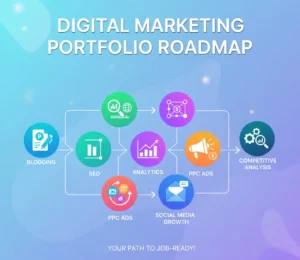
Project #1: Launch a Niche Blog
Why it will work: Shows analytics skills, SEO, and content creation in one package.
What to do:
- Choose a micro-niche (e.g., “sustainable tech gadgets for students”).
- Publish 10-15 optimized articles.
- Track rankings and traffic growth
- Document your SEO strategy and results.
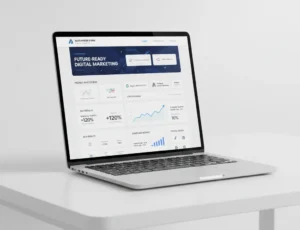
Portfolio showcase: Include screenshots of Search Console data, keyword rankings, and traffic growth graphs.
Ahrefs’ study of 2 million random keywords found that the first page in the search results is almost 3 years old (on average), but new content can rank within 3-6 months for low-competition keywords.
Project #2: Run Facebook/Instagram Ads (With Your Own Money)
Budget needed: $50-100
What to do:
- Promote your blog, a friend’s business, or a nonprofit.
- Test 3-4 ad variations
- Track cost-per-click, conversions, and ROI
- Create a case study
Key metrics to showcase:
- Ad spend vs. results generated
- A/B test insights
- Audience targeting strategy
This will demonstrate that you understand digital marketing tools and paid acquisition skills that are valuable.
Project #3: Social Media Growth Challenge
Choose a particular platform and commit to 90 days of consistent posting.
Your mission:
- Grow followers organically by 500+
- Achieve 5%+ engagement rate.
- Collaborate with 2-3 micro-influencers
- Create a social media marketing strategy document.
Pro tip: Document your analytics, engagement tactics, and content calendar. This will shed light on strategic thinking beyond just posting.
Project #4: Email Marketing Campaign
What to do:
- Build an email list of 100+ subscribers.
- Create a 5-email welcome sequence.
- A/B test subject lines
- Track open rates, click rates, and conversions
Use Mailchimp or ConvertKit (both have free tiers). This will help you understand nurture sequences and marketing automation—crucial for 2026.
Project #5: Competitive Analysis Report
Choose a brand in your niche and perform a deep-dive competitive analysis:
- Content analysis
- Social media strategy audit
- SEO performance and keyword gaps
- Recommendations for improvement
This will demonstrate your strategic thinking and analytical abilities, which are essential for a digital marketing job.
Phase 3: Package Your Portfolio Like a Pro (Month 6)
Choose Your Platform
Option 1: Personal Website (Best for serious candidates)
- Use WordPress or Webflow
- Costs: $50-100/year
- Shows web development initiative
Option 2: Portfolio Sites (Quick and clean)
- Notion, Contently, or Journo Portfolio
- Free to start
- Professional templates available
Option 3: Google Drive + PDF (minimum viable)
- Better than nothing
- Won’t be ideal for competitive roles
What to Include on Every Portfolio Page
- Clear headline stating your specialization
- 3-sentence bio highlighting results
- 4-6 best projects with metrics
- Marketing certifications prominently displayed
- Social links and contact information
- Blog or insights section (optional but impressive)
Phase 4: Get Job-Ready Beyond the Portfolio
Certifications That Are Relevant in 2026
According to Google’s Careers site, Google’s professional career certificates are recognized by over 150 employers. Here’s what employers will value:
Must-Have:
- Google Analytics Certification
- Facebook Blueprint Certification
- Google certification (Google Ads Search, Display, or Video)
Nice-to-Have:
- SEMrush SEO Toolkit
- Hootsuite Social Marketing
- HubSpot Content Marketing
Build Your Personal Brand
Your portfolio will prove your competence, and your personal brand will prove consistency.
Quick wins:
- Comment on industry leaders’ posts
- Share your portfolio projects as they develop.
- Start a newsletter documenting your learning journey.
- Post digital marketing insights on LinkedIn 2-3x/week
Stat to remember: Employees who share content receive 8 times more engagement than content from company accounts (source: LinkedIn).
Network Like You Mean It
- Attend local meetups or webinars.
- Reach out to professionals for 15-minute chats.
- Offer free help to small businesses for testimonials.
- Join digital marketing communities (Reddit, Discord, Facebook groups).
The Job Search Strategy for Portfolio-Powered Candidates
Where to Apply
Don’t just press “Easy Apply” on Indeed. Instead:
- Target companies using tools you’ve mastered
- Find hiring managers on LinkedIn.
- Send your portfolio with a personalized note.
- Reference specific projects relevant to their needs.
The Pitch That Will Get Responses
“Hi [Name], I noticed [Company] is hiring a junior digital marketer. I recently increased a blog’s organic traffic by 340% in 90 days using strategic SEO. I documented the entire process in my portfolio [link]. Would love to discuss how I could bring similar results to [specific project/goal].”
What Employers Will Look For (Based on Current Trends)
Analyzing 500+ digital marketing job listings reveals these top requirements that will lead in 2026:
| Skill | Mentioned in |
| Analytics/Data Interpretation | 87% |
| Social media marketing | 78% |
| SEO knowledge | 76% |
| Content creation | 71% |
| Paid advertising experience | 64% |
| Email marketing | 52% |
Your portfolio must show at least 4 of these 6 areas.
Final Thoughts: Start Before You’re Ready
The students who will achieve a successful career in digital marketing in 2026 won’t be the ones who wait until they feel “ready.” They’ll be the ones who start building, shipping, and iterating now.
Your next step: Pick one project from this guide and start today. Not tomorrow. Not next week. Enroll in digital marketing training today in SDMskills—where expert guidance makes you job-ready.